
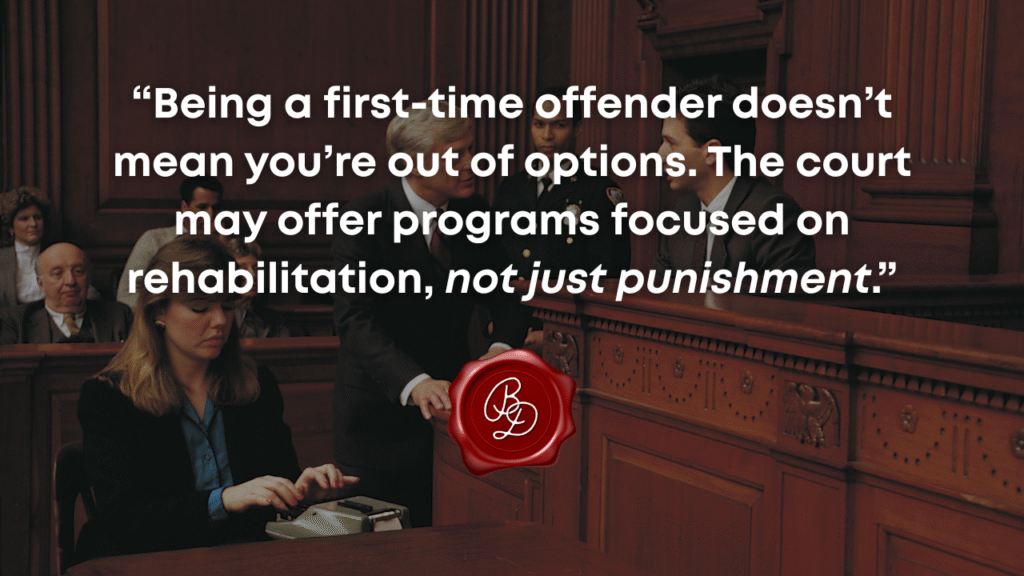
Facing criminal charges for the first time can be overwhelming, but the good news is North Carolina’s legal system offers opportunities for rehabilitation, not just punishment. Here’s what first-time offenders need to know to navigate the process more confidently.

What Counts as a “First-Time Offender” in NC?
- You’re considered a first-time offender if you’ve never been previously convicted of a crime. North Carolina courts recognize that people make mistakes and may offer a second chance through special programs.
Options & Programs Available for First-Time Offenders
- Deferred Prosecution
Courts may agree to delay proceedings while you complete court-mandated requirements like community service, counseling, or classes. Successfully finishing the program can lead to dismissal of charges. - Conditional Discharge (90–96 Program)
Under N.C. Gen. Stat. § 90-96, eligible defendants with certain drug or alcohol offenses may receive probation instead of conviction. Once program terms are met, charges are dismissed and eligible for expungement. - First Offender Felony Diversion
For select non-violent felony cases, community service, rehab, and monitoring instead of conviction, with the possibility of expungement upon successful completion. - Probation
The court may opt for probation over jail time. This allows you to remain in the community under court supervision, adhering to specific conditions.
Additional Pathways and Support
- Youth Courts, Education & Community Service
Younger offenders could be eligible for mentoring, life-skills training, or community service to encourage positive change. - Expungement Opportunities
Successfully completing first-offender programs often leads to expungement, clearing your record and improving future employment or housing prospects. - Restorative Justice & Support Programs
Certain programs allow offenders to repair harm via dialogue and compensation toward affected parties, fostering accountability and growth.
What You Can Expect in Court
- Arraignment & Plea Options
Your initial court appearance includes entering a plea, guilty, not guilty, or no contest. Your attorney may negotiate for a diversion or dismissal based on eligibility. - Sentencing Guided by Structured Sentencing Laws
North Carolina’s Structured Sentencing Act uses guidelines based on crime class and your criminal history. First-time status can push sentencing toward favorable options like probation or community penalties.
Why You Need an Attorney on Your Side
A knowledgeable attorney can:
- Navigate diversion and conditional discharge options
- Advocate for reduced penalties or dismissal
- Guide the expungement process
- Protect your rights at each court step
Professional legal help substantially increases the likelihood of a better outcome.
Ready to Take the Right Next Step?
If you’re a first-time offender facing charges in North Carolina, you don’t have to face the legal system alone. Contact Bourlon & Davis P.A. for a confidential consultation. Let us protect your rights and explore every possible opportunity for your future.
👉 Visit us at bourlondavispa.com to schedule a consultation today.
